STARK
STARK


Clean before applying lubricant
Use a gentle flow of water, suitable chain cleaner and a cloth. Keep high-pressure water away from bearings and electrical equipment. Let the chain dry fully before adding lubricant; applying it over water and embedded dirt leaves abrasive contamination on the drive.
Confirm the motorcycle is fully off, then rotate the rear wheel by hand while applying lubricant evenly. One wheel revolution provides enough coverage. Wipe away the excess, which otherwise collects grit without improving lubrication. The specified routine calls for lubrication before and after every ride.
Measure from the same point
Check slack at the end of the chain slider and use that position every time. The official figure is about 25–32 mm. A consistent measuring point makes readings comparable and prevents repeated adjustment of a chain that already sits within specification.
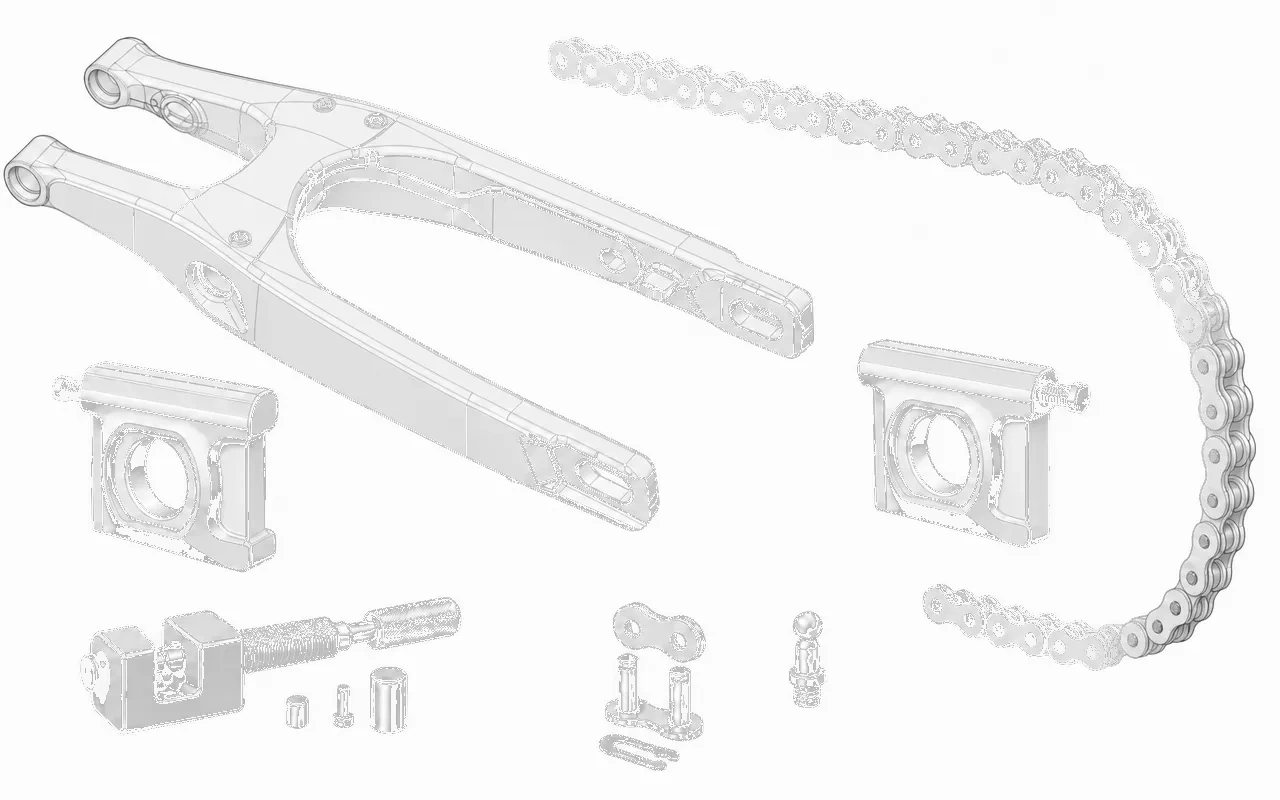
When correction is required, move both sides of the axle equally. The clicker counts matching quarter turns and helps preserve wheel alignment. Tighten the axle to the torque stated in the manual; guessing the value risks an insecure axle or damaged components.
Inspect the whole final drive
Check chain elongation, both sprockets, the slider and the guide during the same inspection. Hooked or damaged teeth, a worn guide or an exhausted slider can cause noise and accelerate wear elsewhere, even when chain slack measures correctly.
Order replacement sprockets by the required OEM code because available sizes remain separate parts. If the wheel will not align, adjustment changes rapidly or damage extends beyond ordinary wear items, stop adjusting and have the drive inspected. Replacing one visible casualty while leaving its cause in service wastes the new part.