STARK
STARK


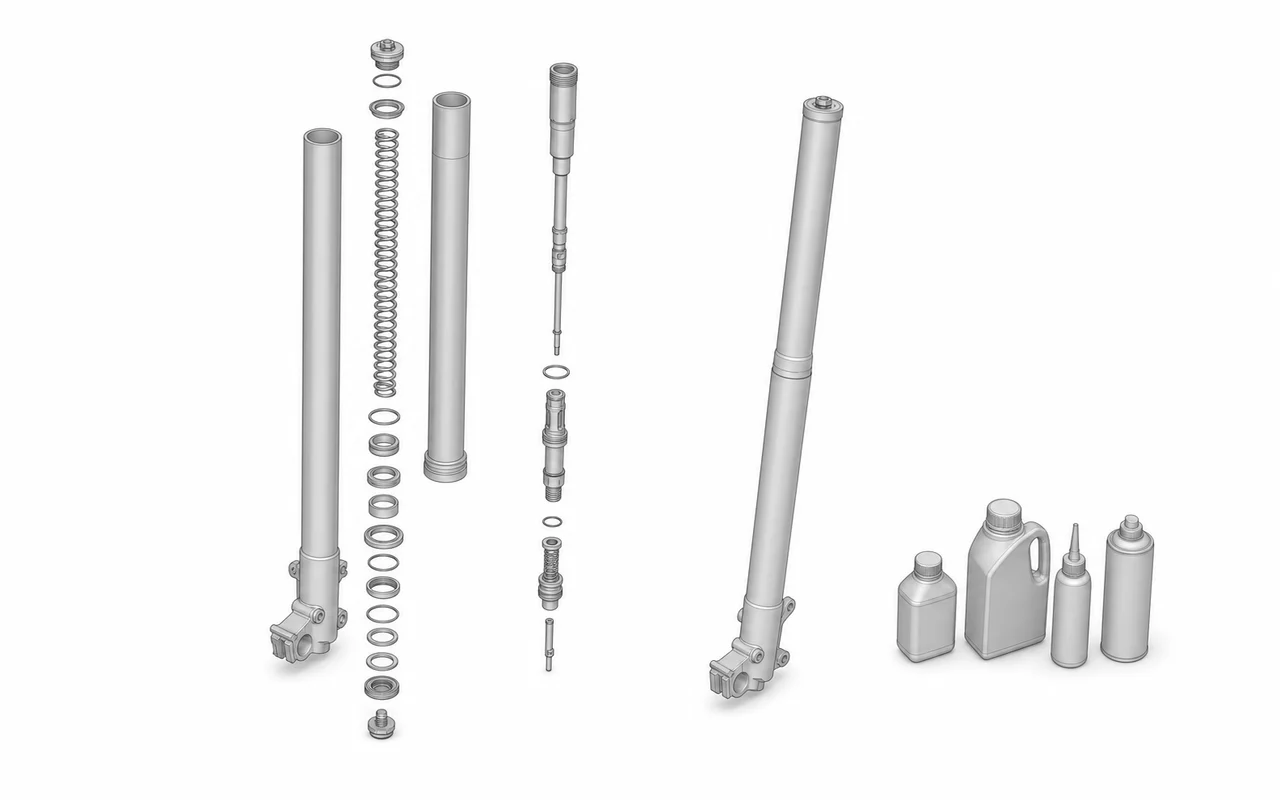
Choose springs from riding weight
The spring table specifies Soft for 65–75 kg, Medium for 75–90 kg and Hard for 90–100 kg. Include the rider, armour, backpack and tools because the motorcycle carries the complete load. Equipment can move you into the next range before pace or terrain enters the decision.
Near a boundary, consider whether you ride gently or regularly load the suspension through hard braking, jumps and faster enduro. Start with spring selection and sag. Repeated clicker changes cannot recover the support and working range lost through an unsuitable spring.
Make one traceable change
Write down the starting clicker positions and test on familiar ground. Alter one parameter between comparable runs. Clockwise adds compression damping or slows rebound; counter-clockwise reduces compression damping or speeds rebound. Compression and rebound settings must match on both fork legs.
Connect each adjustment to one symptom. If the fork dives excessively, assess compression after confirming spring and sag. If it kicks back or fails to settle, assess rebound. When a change worsens the motorcycle, return to the recorded baseline rather than adding another adjustment to hide it.
Separate setup from mechanical condition
Bottoming, harshness and poor grip can also come from wear, damage or overdue oil. Check spring choice, sag and mechanical condition before reaching for harder settings. Safety-critical suspension work belongs with an experienced technician when leakage, play or another fault is present.
Bleed the KYB fork after every ride with it fully extended. Fork oil is due at 15 hours or 12 months. At 40 hours or 12 months, the fork and shock both require service. Record those intervals beside your baseline so a gradual loss of damping is not mistaken for a tuning problem.