STARK
STARK
Use the result that matches your pace
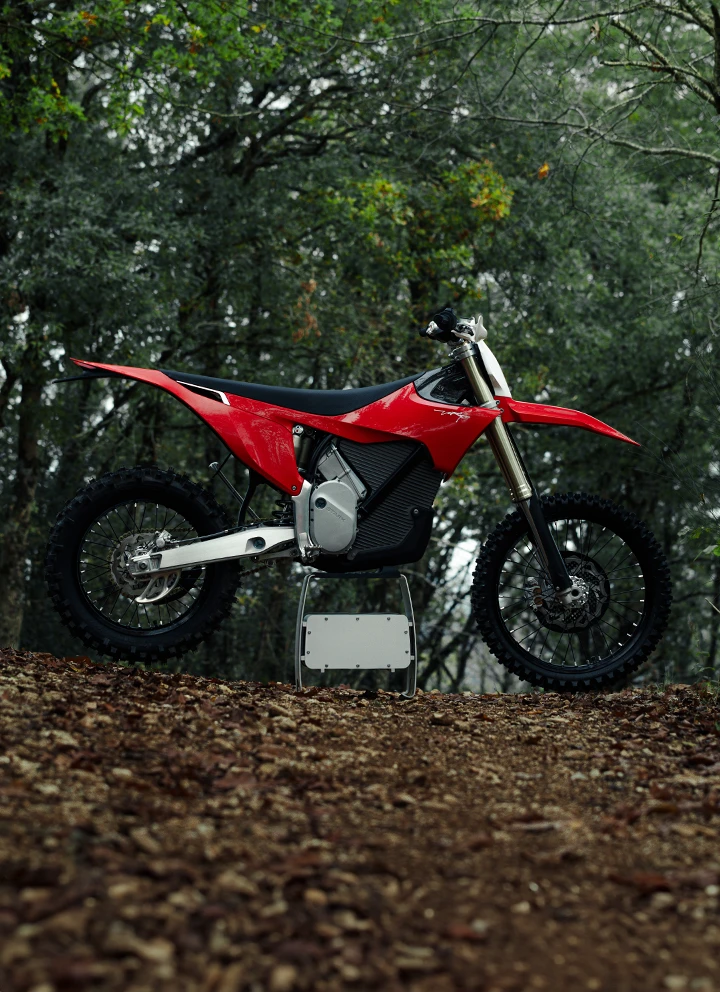
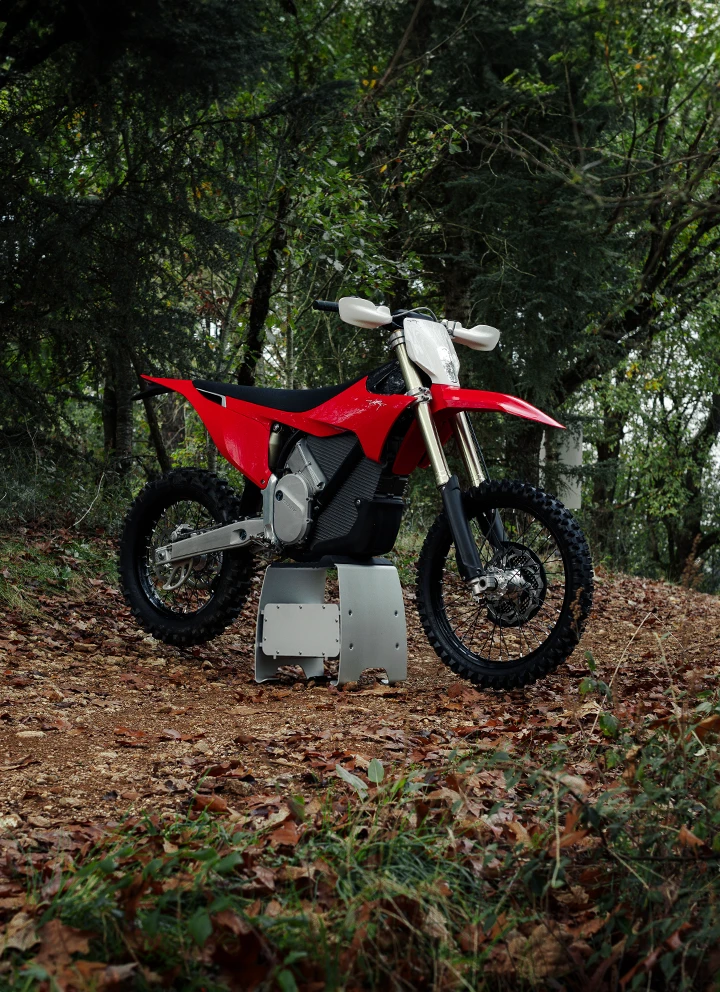
Cycle News rode the EX for six months across paved roads, fire roads, forest tracks and technical single track. Aggressive riding returned about 2–3 hours and 48–56 km. An intermediate pace produced 3–4 hours and 56–64 km, while easier riding reached 4–6 hours and 64–80 km.
The VARG EX has a 7.2 kWh battery, and the manual states up to 6 hours of riding. Treat that as a ceiling. Deep ground, repeated climbs and frequent hard acceleration move the result towards the shorter figures, especially when the return route includes mud or a sustained climb.
Technical trails favour riding time
Average speed stays low in tight enduro, and power arrives in short bursts rather than as a continuous demand. The Cycle News tester found 25–35 hp a useful trail range. Full output remains available, but repeatedly asking for it increases consumption without necessarily improving pace through roots and stones.
Select the map for control and terrain rather than chasing a theoretical range figure. Your useful reserve matters more than the lowest possible power setting. Finish a normal loop with enough charge for a detour, deteriorating ground or the final climb instead of planning to arrive at the limit.
Road speed changes the calculation
Cycle News reached about 97 km on open trails and fire roads. Men’s Journal estimated about 97 km for mixed street, gravel and dirt during a two-day test and about 64 km for highway use, describing both results as ballpark estimates rather than a standardised road test.
The EX handles road links between dirt sections, but sustained speed is its clearest range constraint. For longer asphalt stretches, plan the charging point before leaving rather than assuming a mixed-terrain figure will transfer to the road.
Establish your own reserve
Ride the same loop 2–3 times and record distance, duration, terrain and battery levels at the start and finish. Comparable rides quickly show whether your use resembles the aggressive, intermediate or easier figures.
A full charge takes about 2 hours from 220 V with the included 3.3 kW stand charger. That is the useful turnaround figure for planning another ride; an additional charger is unnecessary for the standard setup. Keep the motorcycle, connector and charger dry, and do not charge below 4°C.